Background
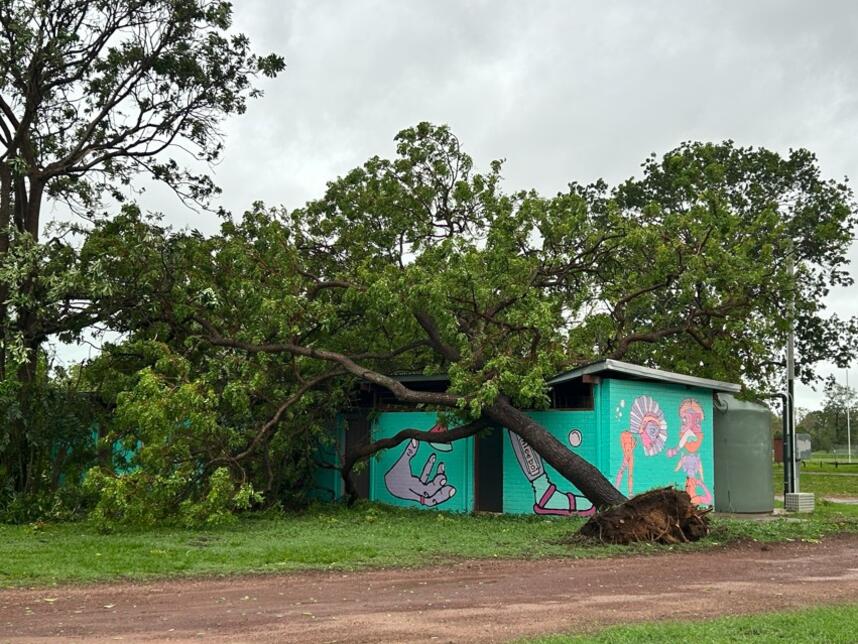
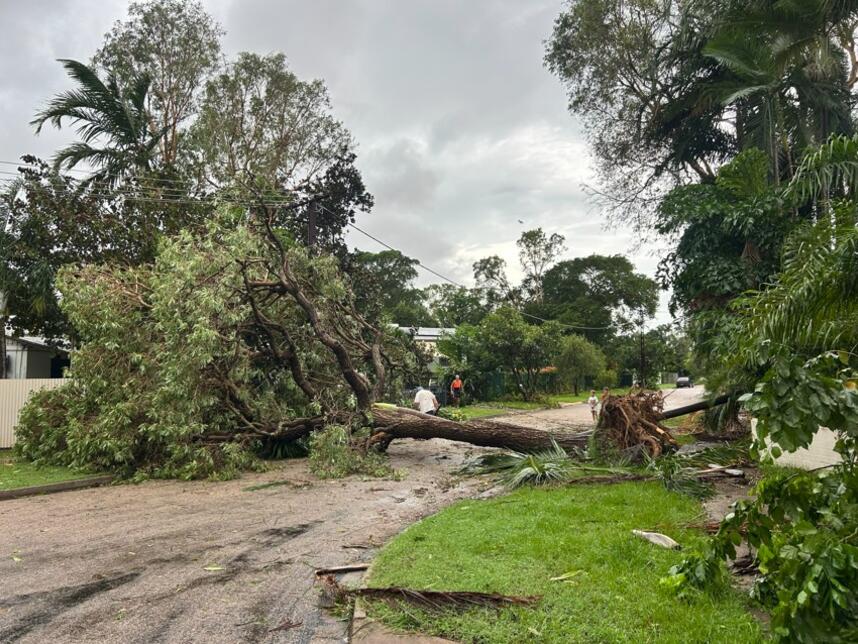
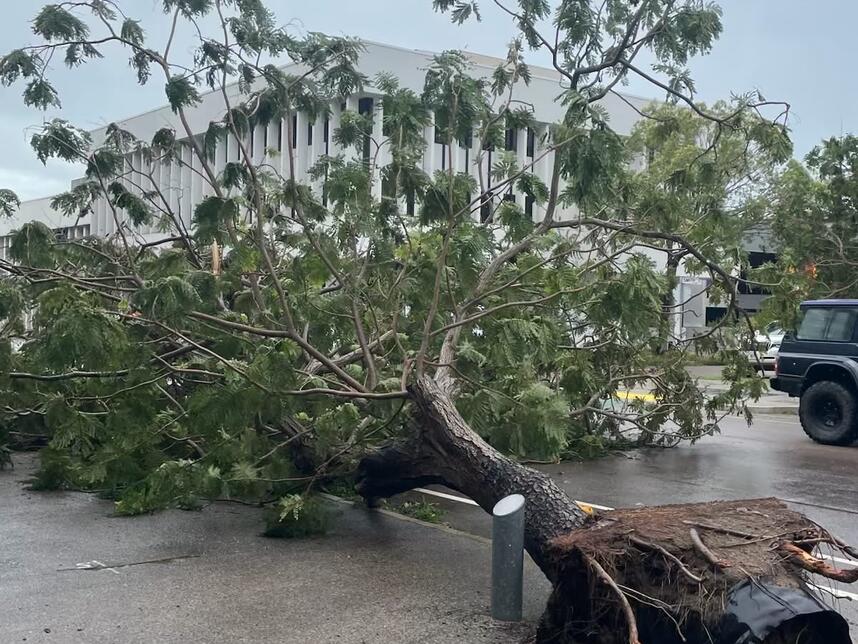
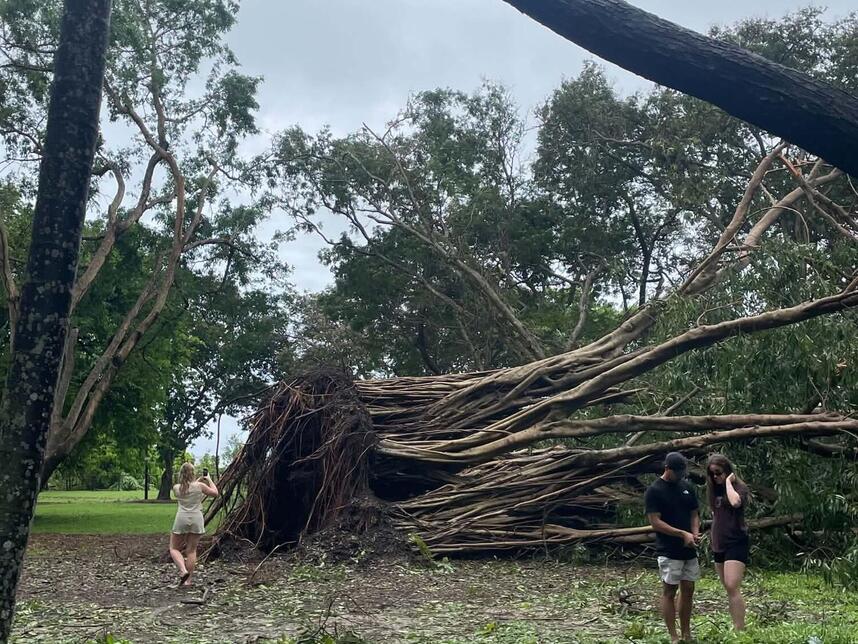
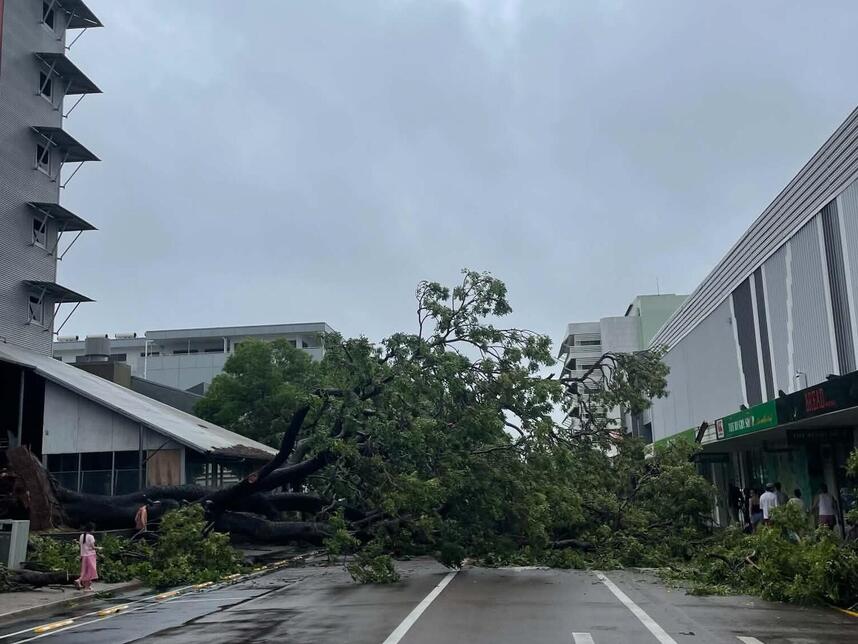
On 22 November 2025, Cyclone Fina intensified into a Category 3 severe tropical cyclone as it crossed the Greater Darwin region. The cyclone brought damaging winds, widespread tree damage and power outages affecting around 19,000 properties.
It was the strongest cyclone to impact Darwin since Cyclone Tracy in 1974. Despite the significant impacts, there were no reported fatalities or serious injuries.
The most recent significant cyclone to affect the region was Cyclone Marcus in 2018, a Category 2 system that brought gale-force winds, widespread tree damage and power outages across Darwin.
City of Darwin recovery efforts
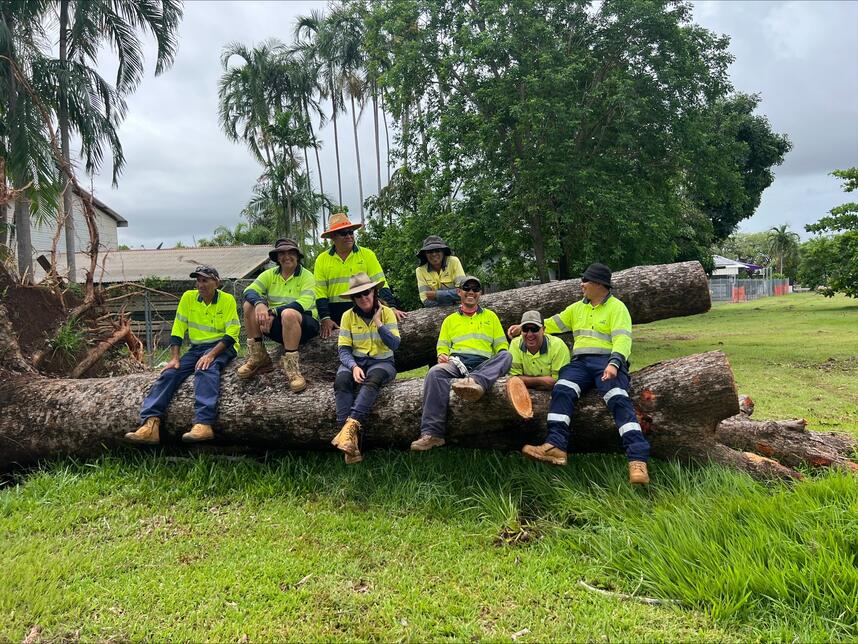
City of Darwin crews and contractors formally completed Cyclone Fina recovery on Thursday 30 April 2026.
Recovery efforts were undertaken during the wet season, with prolonged rain, humidity and restricted site access creating ongoing challenges. These conditions delayed some works, particularly in parks and open spaces, where crews and efforts were managed to avoid causing further damage.
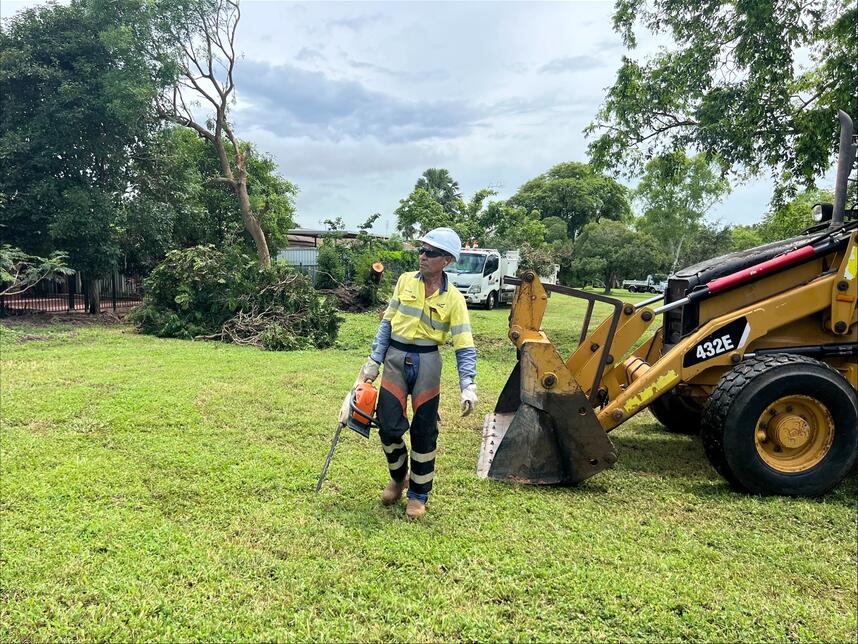
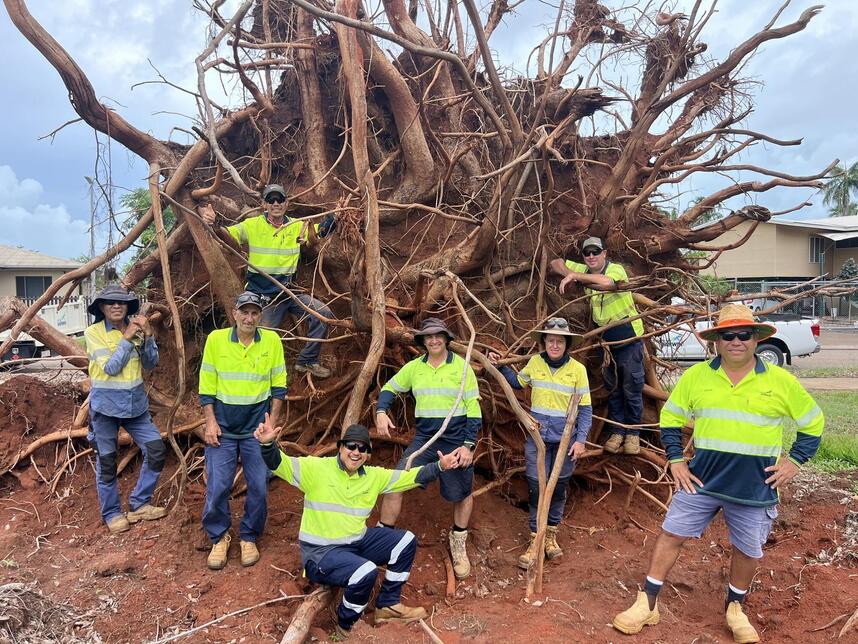
City of Darwin staff, specialist arborists and contractors worked extended hours, coordinating with utility providers and government agencies to manage safety risks around infrastructure and public spaces.
City of Darwin thanked the community for their patience, resilience and support throughout the Cyclone Fina recovery efforts. The recovery has reinforced Darwin’s resilience and strengthened City of Darwin’s preparedness for future weather events, with a continued focus on maintaining safe, connected and vibrant community spaces.
Overview:
-
13,483 surveys of infrastructure and trees were conducted across the municipality, including assessing the entire urban tree network to ensure community safety.
-
5,279 trees were identified as requiring works
-
1,960 high and moderate-risk trees were removed.
-
1,203 tree stumps were cleared from road verges and 1,063 stumps from parks.
-
More than 200 City of Darwin staff and contractors worked on the recovery, supported by the Northern Territory Government and utility providers.
-
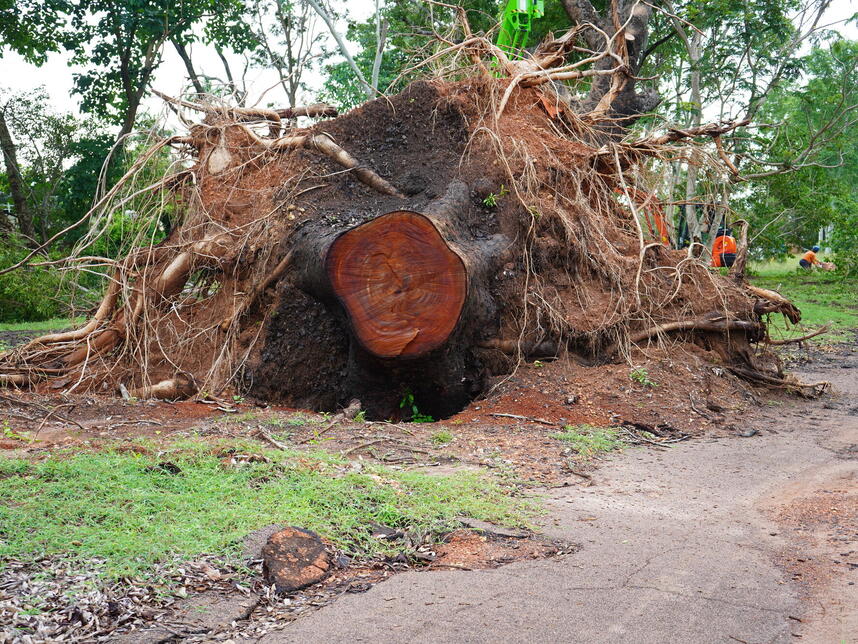
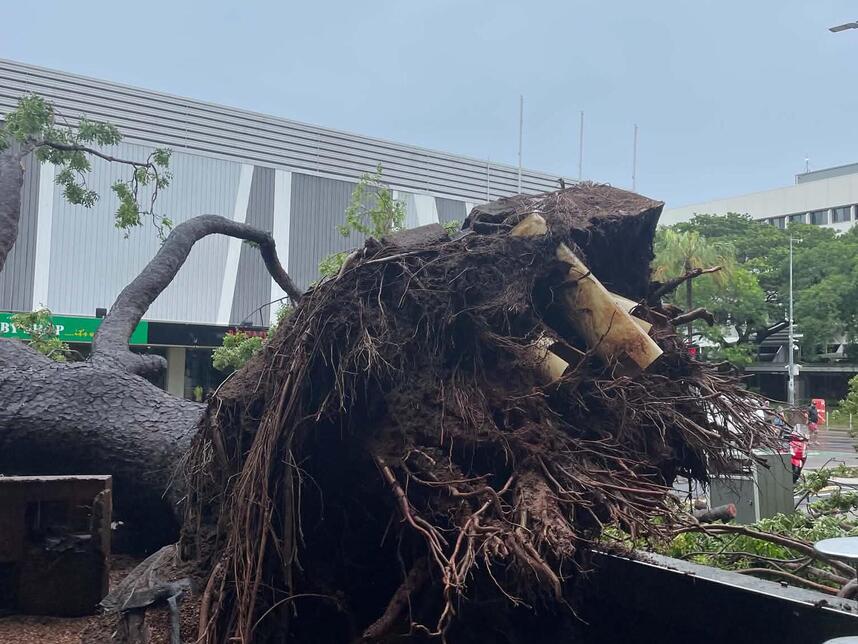
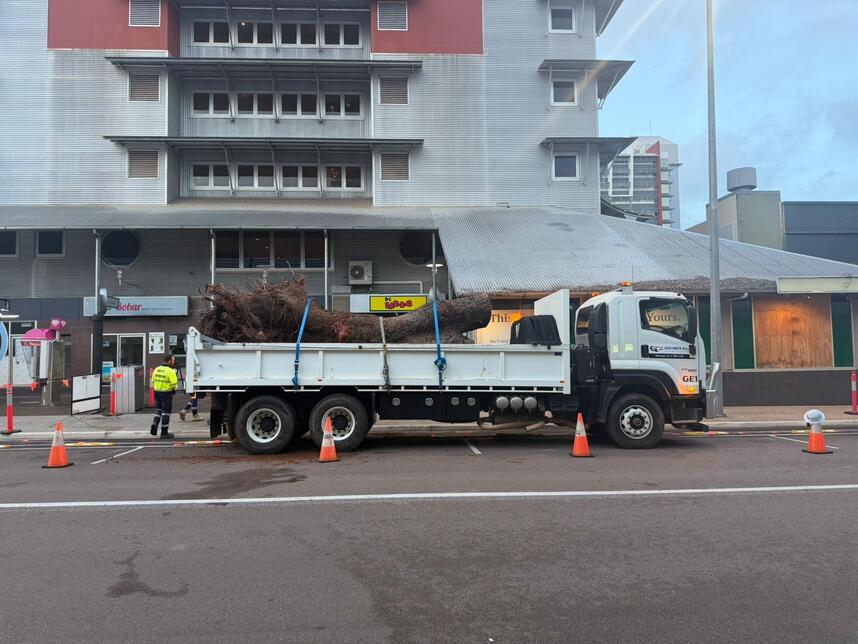
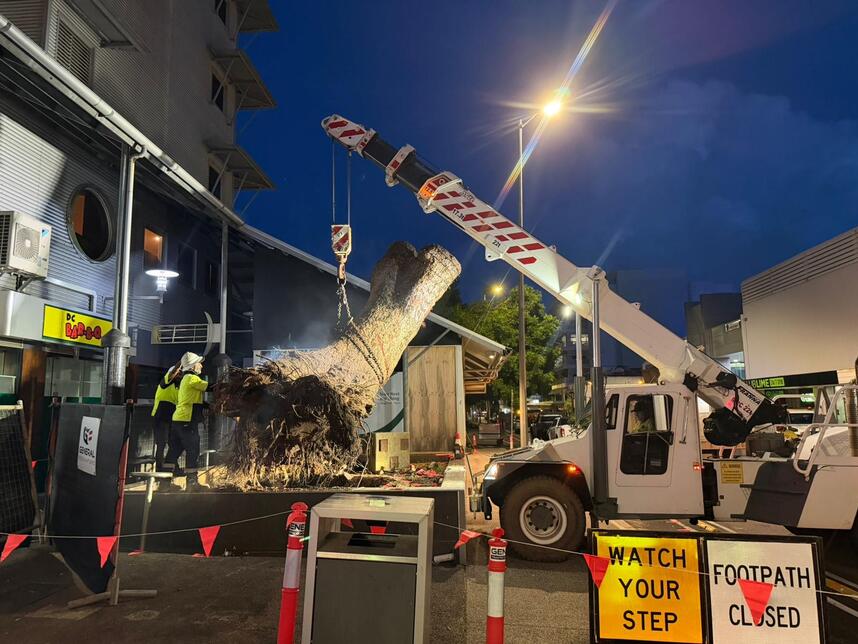
One large tree stump removed from Smith Street, Darwin City Centre, in January 2026, weighed over 14 tonnes.
-
Impacts on City of Darwin infrastructure included damage to shade sails at parks and playgrounds, damage to lighting, irrigation systems, playground equipment and pathways across the 630km of footpaths,150 playgrounds,19 sporting grounds and ovals, 221 parks and green spaces and 590 hectares of green space.
-
One large tree stump removed from Smith Street, Darwin City Centre, in January 2026, weighed over 14 tonnes (pictured in image gallery below).
Frequently Asked Questions
Cyclone Fina FAQs
- How long did Cyclone Fina Recovery take?
-
Cyclone Fina recovery was delivered over five months as a phased approach involving hundreds of City of Darwin staff and contractors. It was officially complete on 30 April 2026.
Phase One: Initial Three-Month Recovery focussed on the municipality's highest-risk and highly used areas.
- In the first 72 hours following the cyclone, crews focused on reopening critical road networks to restore access to hospitals, emergency services and schools, and thereopening Shoal Bay Waste Management Facility to receive additional general waste generated by power outages, while green waste restrictions were in place.
- Kerbside bin collection services were rapidly restored for the safe and effective management of general waste and recycling.
- Fallen trees and debris were cleared to enable rapid access, with detailed risk assessments continuing as conditions stabilised.
- While many areas appeared cleared early, significant work continued behind the scenes to ensure sites were stable, safe and ready for long-term use.
Phase Two: Recovery commenced once City of Darwin’s teams were confident that the priority areas were safe and operational for the community.
- This second phase prioritised verge management, further tree and stump management and removal, mowing grass on verges, ovals, parks and reserves and infrastructure repairs.
- What had the greatest impact on recovery efforts?
-
Cyclone Fina made landfall on 22 November 2025, the earliest cyclone to make landfall on the Northern Territory coast since records began, and the most intense cyclone to hit Darwin since Cyclone Tracy. Recovery efforts were hindered by the record-breaking wet season that followed. City of Darwin staff and contractors worked tirelessly through the wet season to make areas safe and restore services to the community.
The response was declared officially complete on 30 April 2026.
- Which City of Darwin facilities and services were impacted?
-
Facilities closed during the cyclone included the Civic Centre, libraries, swimming pools, community centres, parks, ovals, open spaces, cemeteries, public toilets, walkways, Dragonfly and West Lane car parks, the Pound and Shoal Bay Waste Management Facility.
After the cyclone passed, facilities reopened progressively following detailed safety inspections. Some parks, sporting facilities and public spaces remained closed or operated with restrictions while damaged trees, debris and infrastructure repairs were completed.
- Why was Shoal Bay Waste Management Facility temporarily closed after the cyclone?
-
Shoal Bay Waste Management Facility (SBWMF) was temporarily closed to the public to support safe emergency waste management operations.
During the initial recovery period, the facility continued receiving commercial waste, kerbside collections and putrescible waste to maintain essential waste services while access for the general public was restricted.
Once it was safe to do so, the facility reopened in stages, initially accepting general waste before resuming normal operations.
Timeline:
Friday 21 November 2025: City of Darwin notified the community that all facilities and Shoal Bay Waste Management Facility (SBWMF) would be closed over the weekend. It informed that SBWMF would remain closed until further notice and that access restrictions may apply to the public upon reopening. This was a precaution as City of Darwin prioritises effective waste collection to protect community health and will reinstate any disrupted services as soon as possible.
Monday 24 November 2025: The facility was closed to the general public, but continued to receive and process business and community waste, including rotting materials, through kerbside collections. Kerbside bin collection operated as normal.
Wednesday 26 November 2025: The facility reopened to the public for general waste only. The community was encouraged to take green waste to the NTG emergency green waste site at Hidden Valley.
Tuesday 22 December 2025: SBWMF reopened to the public.
Saturday 23 January 2026: SBWMF opened to residents and commercial for green waste.
- Did City of Darwin plan for the possible closure of Shoal Bay Waste Management Facility?
-
Yes, it did. Comprehensive planning has long been in place for scenarios where Shoal Bay Waste Management Facility may be impacted during a major weather event.
The Northern Territory Government (NTG) has an Emergency Waste Management Plan for Greater Darwin and operated in accordance with that plan including NTG standing up the Hidden Valley green waste site.
These emergency waste site arrangements ensured waste services can continue even if SBWMF was temporarily unavailable to the public.
These coordinated plans are designed to prioritise community safety, maintain essential services, and support a rapid clean-up across Darwin.
- Where did the community dispose green waste after the cyclone?
-
In accordance with the Northern Territory Government Emergency Waste Management Plan for Greater Darwin, Northern Territory Government (NTG) set up the emergency green waste site at Hidden Valley.
The temporary facility helped manage the significant volume of vegetation debris generated by the cyclone while reducing pressure on Shoal Bay Waste Management Facility during the early stages of recovery.
This alternative site was open to the community from Monday 24 November 2025 - Friday 23 January 2026.
- What did City of Darwin learn from Cyclone Fina?
-
Cyclone Fina reinforced the importance of preparedness, strong partnerships and prioritising community safety throughout recovery.
The event demonstrated the value of coordinated planning between City of Darwin, the Northern Territory Government, emergency services, contractors and utility providers. It also highlighted the importance of clear public communication, staged recovery planning and maintaining contingency arrangements for essential services.
- Where can I read City of Darwin updates and media releases about Cyclone Fina?
-
See below the links to media releases.
General Cyclone FAQs
- What can residents prepare for the cyclone?
-
Ahead of the cyclone season, residents are encouraged to prepare their properties by removing items that can become hazardous in a cyclone.
In the event of a cyclone, City of Darwin encourages the community to follow the advice from Secure NT and Bureau of Meteorology (BoM).
Stay informed through emergency broadcaster ABC Radio Darwin 105.7.
- How long does a cyclone take clean-up?
-
Every cyclone is different, and recovery time depends on the severity of impacts, the volume of debris, weather conditions and the extent of damage to public infrastructure. City of Darwin crews and contractors spent five months on Cyclone Fina Recovery efforts.
For perspective, City of Darwin has a relatively small team that manages:
- 590 hectares of green space
- 221 parks and green spaces
- 19 sporting grounds and ovals
- 150 playgrounds
- 22,000 driveways
- 630km of footpaths
- 90% of Darwin’s road network (475km)
- Which City of Darwin services and facilities could be impacted during a cyclone?
-
The below City of Darwin facilities may experience service impacts during, and after, a cyclone:
- Civic Centre
- Libraries
- Pools
- Community Centres
- Parks, ovals and open spaces
- Cemeteries
- Walkways
- The Pound
- all public toilets
- Dragonfly and West Lane carparks
- Shoal bay Waste Management Facility
Following a cyclone, City of Darwin prioritises the return of essential services and facilities, followed by roads and footpaths, public facilities and eventually parks, ovals and open spaces.
City of Darwin is also responsible for mowing 363 sites. Cyclones can impact our ability to maintain these sites for up to six months, particularly if the cyclone hits at the start of the wet season, due to debris, unstable ground and diversion of resources.
- How will recovery works be prioritised?
-
Following a cyclone, City of Darwin prioritises the return of essential services and facilities, followed by roads and footpaths, public facilities and eventually parks, ovals and open spaces.
Recovery works are prioritised for community safety. - Does City of Darwin have a Cyclone Response Plan?
-
City of Darwin maintains a comprehensive cyclone plan supported by detailed subplans across all areas of operations.
These plans guide preparedness activities before a cyclone, response during the event and the staged recovery process following impact, ensuring community safety remains the highest priority.
- What if a tree on council land has fallen within a residents’ property boundary causing damage. Who pays for the damage?
-
Residents are responsible for managing any damage within their property. City of Darwin crews will only clear debris up to the property boundary and cannot enter private land. Residents may submit an insurance claim if they believe City of Darwin is at fault.
- Can green waste be placed on the verge?
-
If it is safe to do so, residents may clear cyclone-related debris from the road outside their property and place it on the verge for collection as part of the coordinated clean-up.
Residents are asked not to move green waste from within their property onto the verge. This is considered household green waste and remains the resident’s responsibility to dispose of appropriately.
Safety comes first. Only clear debris if it is safe to do so, and never attempt to move large branches, trees or anything tangled with power lines.
- Will residents be fined for the debris cleared from the road and placed on the verge, or for the debris that has fallen onto the verge outside a property?
-
Residents will not be fined for storm debris that was already on the road or that fell onto the verge during the cyclone. If residents safely clear debris from the road and place it on the verge, City of Darwin will clear it as part of the coordinated clean-up. We appreciate residents helping to keep roads clear and safe.
- Where can residents take green waste after a cyclone?
-
Residents should monitor the City of Darwin website and social media channels throughout cyclone season for information about available disposal locations and any changes to waste services.
Keywords
- Emergency green waste: Trees, branches and leaves that have fallen or been damaged as a result of a cyclone.
- Verge: the area between the property boundary and the road.
Cyclone Fina 2025 video updates
| Mowing schedule returned - 27/02/2026 | Jingili Water Gardens reopened - 23/01/2026 | Recovery FAQ's - 03/01/2026 | Playground safety update - 23/12/2025 |
| Recovery FAQs - 17/12/26 | Lord Mayor pools update - 28/11/26 | Lord Mayor operations update - 27/11/25 | Lord Mayor facilities update - 25/11/26 |
Media Releases
Find all Cyclone Fina media releases on the News page.
- 2026
-
- City of Darwin thanks community after Cyclone Fina recovery completed | City of Darwin | Darwin Council, Northern Territory 22/05/2026
- Cyclone Fina recovery progress | City of Darwin | Darwin Council, Northern Territory 15/01/2026
- Community safety alert – parks remain closed due to tree fall risk | City of Darwin | Darwin Council, Northern Territory 05/02/2026
- Cyclone Fina recovery: Various sporting ovals reopen | City of Darwin | Darwin Council, Northern Territory 12/02/2026
- 2025
-
- Caution urged around large and damaged trees | City of Darwin | Darwin Council, Northern Territory 19/12/25
- Cyclone recovery update, community thanked for patience | City of Darwin | Darwin Council, Northern Territory 12/12/25
- Hidden Valley emergency green waste facility extension | City of Darwin | Darwin Council, Northern Territory 03/12/25
- Cyclone Fina recovery efforts continue | City of Darwin | Darwin Council, Northern Territory 28/11/25
- Cyclone Fina update: Shoal Bay Waste Management Facility remains closed to the public | City of Darwin | Darwin Council, Northern Territory 23/11/25
- Cyclone Fina update: Community facilities update | City of Darwin | Darwin Council, Northern Territory 26/11/25
- Cyclone Fina update: Community Waste Management Update | City of Darwin | Darwin Council, Northern Territory 25/11/25
- Cyclone Fina update: Community facilities update | City of Darwin | Darwin Council, Northern Territory 25/11/25
- Cyclone Fina update: Community facilities update | City of Darwin | Darwin Council, Northern Territory 24/11/25
- Cyclone Fina update: Community facilities update | City of Darwin | Darwin Council, Northern Territory 24/11/25
- Cyclone Fina update: community facilities update | City of Darwin | Darwin Council, Northern Territory 21/11/25
- Cyclone Fina update: City of Darwin monitoring Tropical Cyclone Fina closely | City of Darwin | Darwin Council, Northern Territory 20/11/25
- Keeping pets safe this cyclone & storm season | City of Darwin | Darwin Council, Northern Territory 19/11/25
- Pre-Cyclone Clean-Up 2025 complete | City of Darwin | Darwin Council, Northern Territory 10/10/25
Relevant media
- Darwin council’s $13.4m Cyclone Fina clean-up bill revealed | NT News 30/06/2026
- Darwin finishes Cyclone Fina clean-up after six months | NT News 26/05/2026
- Everything you need to know about life in Darwin after Tropical Cyclone Fina - ABC News 24/11/2025
- Trees toppled, cars crushed and thousands without power: Tropical Cyclone Fina in pictures - ABC News 15/11/2025
Useful Links
Image gallery